Plumes & Pixels
3D Gaussian Splatting for Complex Natural Specimen Digitization
/Research Project/: 2024
framework////
Our approach to creating a high-fidelity digital twin of the bird of paradise headwear specimen combines advanced computational photography techniques with the 3D Gaussian Splatting (3DGS) method. For data acquisition, we employed a Single Camera Multi-Light (SCML) setup, incorporating cross-polarization techniques to reduce unwanted specular reflections. This approach is particularly crucial for capturing the intricate feather structures of our specimen. The hardware configuration consisted of a Sony A7R IV camera equipped with a Sony GM f1.4 24mm lens, operated at f16, 1/125s, and 100 ISO. A HOYA HD3 Circular HRT Polarizer was attached to the lens to control light polarization. Illumination was provided by four Godox DP600IIIV Studio Flashes with softboxes, each fitted with linear polarization filters.
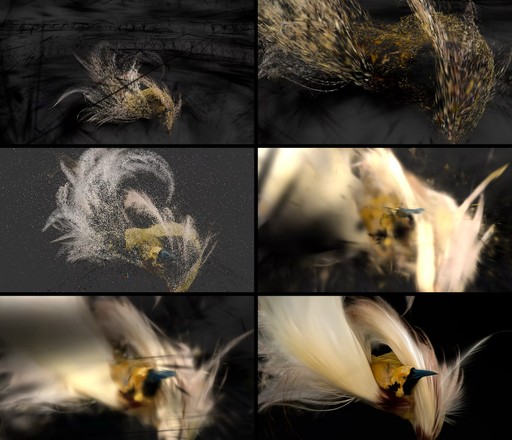
The core of our approach lies in the application of 3D Gaussian Splatting to the captured image data. We utilized existing 3DGS technology, adapting it to the specific challenges presented by our complex natural specimen in a museum context. Our focus was on identifying the effectiveness of this technology and understanding its place and purpose in museum digitization efforts. The process involved training the 3DGS model on our comprehensive image dataset, and iteratively refining the representation to best capture the visual characteristics.
Post-processing steps were crucial in refining our digital twin. We applied various optimization techniques to ensure that the final model accurately represented the fine details while maintaining computational efficiency. The resulting 3DGS model was then optimized for real-time interaction, allowing for dynamic exploration of the specimen from multiple angles and zoom levels. Throughout this process, we adhered to best practices for optimizing interactive 3D models, balancing visual fidelity and computational efficiency to enhance user experience.
This approach not only preserves the physical attributes of the specimen with remarkable detail but also encapsulates its complex visual properties, providing a more convincing digital representation for interdisciplinary study and appreciation. The digital twin we’ve created offers a non-invasive means for investigation of this millinery artifact, allowing for reflection on nature’s sacrifice for human fashion while safeguarding the original specimen.
Our approach to creating a high-fidelity digital twin of the bird of paradise headwear specimen combines advanced computational photography techniques with the 3D Gaussian Splatting (3DGS) method. For data acquisition, we employed a Single Camera Multi-Light (SCML) setup, incorporating cross-polarization techniques to reduce unwanted specular reflections. This approach is particularly crucial for capturing the intricate feather structures of our specimen. The hardware configuration consisted of a Sony A7R IV camera equipped with a Sony GM f1.4 24mm lens, operated at f16, 1/125s, and 100 ISO. A HOYA HD3 Circular HRT Polarizer was attached to the lens to control light polarization. Illumination was provided by four Godox DP600IIIV Studio Flashes with softboxes, each fitted with linear polarization filters.
The core of our approach lies in the application of 3D Gaussian Splatting to the captured image data. We utilized existing 3DGS technology, adapting it to the specific challenges presented by our complex natural specimen in a museum context. Our focus was on identifying the effectiveness of this technology and understanding its place and purpose in museum digitization efforts. The process involved training the 3DGS model on our comprehensive image dataset, and iteratively refining the representation to best capture the visual characteristics.
Post-processing steps were crucial in refining our digital twin. We applied various optimization techniques to ensure that the final model accurately represented the fine details while maintaining computational efficiency. The resulting 3DGS model was then optimized for real-time interaction, allowing for dynamic exploration of the specimen from multiple angles and zoom levels. Throughout this process, we adhered to best practices for optimizing interactive 3D models, balancing visual fidelity and computational efficiency to enhance user experience.
This approach not only preserves the physical attributes of the specimen with remarkable detail but also encapsulates its complex visual properties, providing a more convincing digital representation for interdisciplinary study and appreciation. The digital twin we’ve created offers a non-invasive means for investigation of this millinery artifact, allowing for reflection on nature’s sacrifice for human fashion while safeguarding the original specimen.
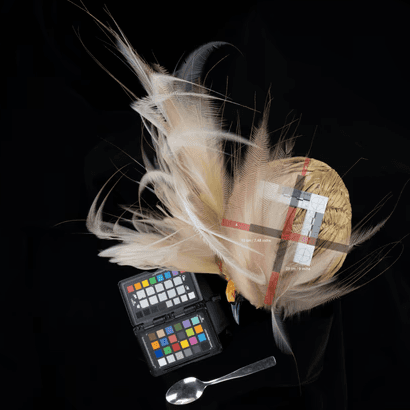
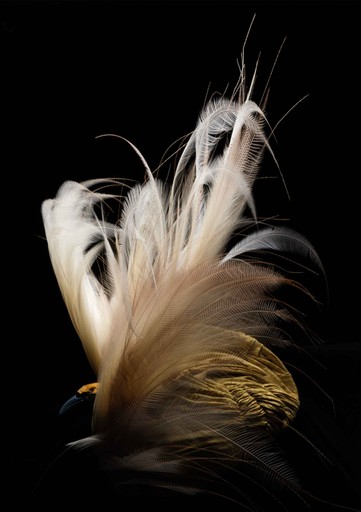
During the digitization of specimens from the Academy of Natural Sciences of Drexel University's collection, a single artifact captured our attention – a vintage headwear adorned with a bird of paradise. This unique piece, produced in the early 20th century, embodies the complex aesthetics of an era where elegance and excess often came at the expense of the natural world. Inspired by this remarkable find, Digital Media graduate students from Drexel University's Westphal College of Media Arts & Design, under the guidance of professors Emil Polyak and Kathi Martin, embarked on a mission to create a digital twin of this specimen. Employing advanced computational photography and 3D reconstruction techniques, they successfully captured the intricate details and vibrant colors of this historic headwear, fashioned from a once-living creature. Supported by a grant from the Museum Innovation Fund, the project was later presented to the public at the Kennett Library, which hosted an art exhibition and talk highlighting this innovative work.
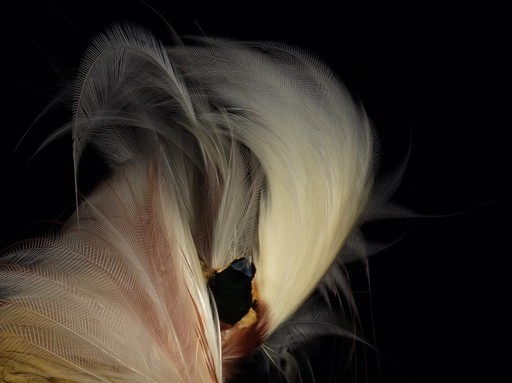
We present an innovative application of 3D Gaussian Splatting for digitizing a vintage bird of paradise headwear, demonstrating unprecedented capture of intricate feather structures and iridescent surfaces. This work advances digital preservation techniques for challenging natural artifacts that hold significance across multiple disciplines, including ornithology, fashion history, and ecology. Our specimen, adorned with feathers from the bird of paradise (Paradisaea minor), exemplifies the unique challenges in preserving objects with complex structures and optical properties. By combining computational photography techniques with 3D Gaussian Splatting, we create a high-fidelity digital twin that captures not only the physical form but also the subtle interplay of different feather types and angle-dependent iridescence. This method offers new possibilities for non-invasive study and appreciation of delicate natural specimens while also addressing the pressing need for advanced preservation techniques in natural history and cultural heritage domains.
During the digitization of specimens from the Academy of Natural Sciences of Drexel University's collection, a single artifact captured our attention – a vintage headwear adorned with a bird of paradise. This unique piece, produced in the early 20th century, embodies the complex aesthetics of an era where elegance and excess often came at the expense of the natural world. Inspired by this remarkable find, Digital Media graduate students from Drexel University's Westphal College of Media Arts & Design, under the guidance of professors Emil Polyak and Kathi Martin, embarked on a mission to create a digital twin of this specimen. Employing advanced computational photography and 3D reconstruction techniques, they successfully captured the intricate details and vibrant colors of this historic headwear, fashioned from a once-living creature. Supported by a grant from the Museum Innovation Fund, the project was later presented to the public at the Kennett Library, which hosted an art exhibition and talk highlighting this innovative work.
We present an innovative application of 3D Gaussian Splatting for digitizing a vintage bird of paradise headwear, demonstrating unprecedented capture of intricate feather structures and iridescent surfaces. This work advances digital preservation techniques for challenging natural artifacts that hold significance across multiple disciplines, including ornithology, fashion history, and ecology. Our specimen, adorned with feathers from the bird of paradise (Paradisaea minor), exemplifies the unique challenges in preserving objects with complex structures and optical properties. By combining computational photography techniques with 3D Gaussian Splatting, we create a high-fidelity digital twin that captures not only the physical form but also the subtle interplay of different feather types and angle-dependent iridescence. This method offers new possibilities for non-invasive study and appreciation of delicate natural specimens while also addressing the pressing need for advanced preservation techniques in natural history and cultural heritage domains.